Why Your Hands Feel Clumsy Starting Guitar After Years Away
Starting guitar after years away can feel like starting from zero because calluses, stamina, and coordination often fade, even when much of your previous learning remains. Declarative memory supports conscious recall of note names and theory, while procedural memory supports learned movements and tends to hold up better. The frustration can reflect an expectation gap between the playing your ear remembers and what your hands can currently produce, so early clumsiness doesn’t establish that you’ve lost everything you learned. Memory savings and the warmup decrement offer useful context, but applying verbal-memory findings and research on shorter rests to a guitar comeback after years involves inference, with no guaranteed recovery timeline.
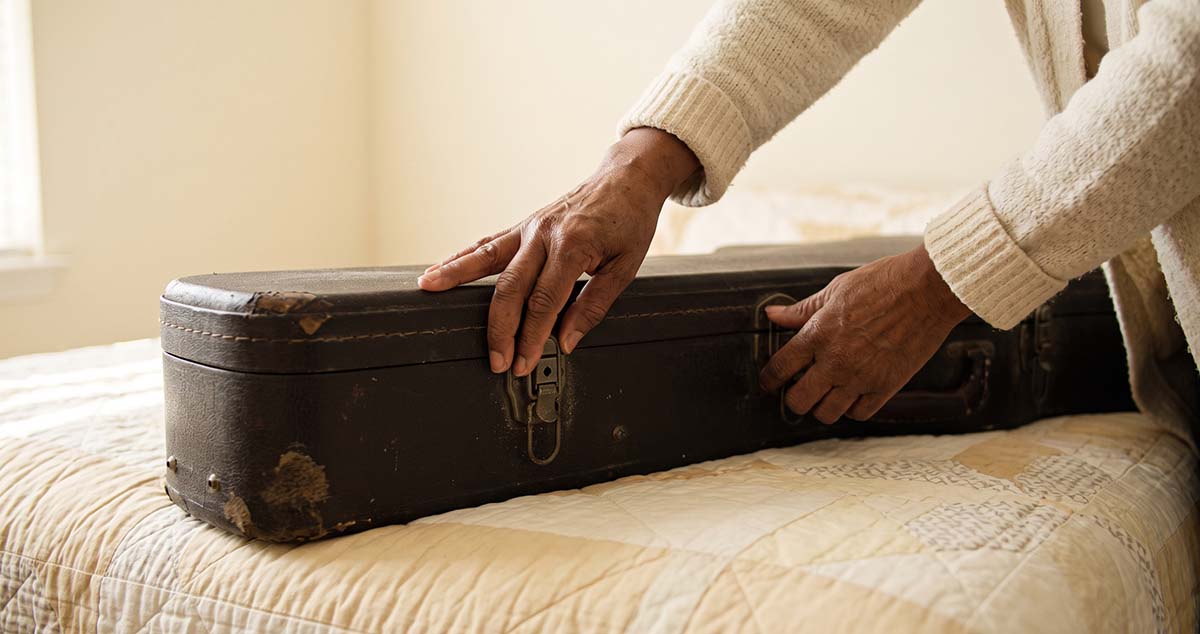
An old guitar case can sit untouched for years, moving through different apartments and different chapters of a life. When you flip the latches, you may hesitate because you worry that years of absence have wiped out what you learned. Starting again from absolute zero seems to be what’s ahead, and the clumsiness of the first few minutes feels like confirmation of that loss.
Time leaves much of your previous learning in place, and what you feel in your hands is a separate matter from what you learned. Those first clumsy minutes tell you about your hands. They don’t tell you what you learned.
Two Memories That Fade at Different Speeds

A learned skill can remain while the body loses the physical conditioning to support it. The frustration of day one comes partly from misunderstanding how your nervous system preserves complex information. During a long break, your brain retains musical information through connected memory systems that don’t all change at the same rate.
Your conscious recall of note names, scale patterns, and music theory belongs to declarative memory, the memory you use to recall facts. Without reinforcement, those facts can become harder to recall, which is why the fretboard can feel unfamiliar. Physical execution relies on procedural memory. Procedural memory is the memory for physical movements, and it relies heavily on the cerebellum and basal ganglia. Those learned movements can hold up better than conscious recall of facts.
Picture the two systems over ten years: declarative recall drops without use, while procedural memory stays more stable. That picture illustrates a general pattern rather than a measured dataset, and applying it to guitar is an inference. It helps explain why learned movements may be retained better than the facts associated with them. Physical repetition gives you a way to begin using those movements again.
The Ear Comes Back Before the Hands

Keeping the memory is only half the picture, because physical conditioning also changes during time away. Over the years, your body often loses its specific adaptations for the instrument. Fingertip calluses fade, forearm stamina often drops, and the fine coordination needed for complex movements can decline. Those changes affect how playing feels even when previous learning remains.
You may have spent your time away listening to music, and you still remember how your own peak performance sounded. The cruelest part of a comeback is that the ear returns long before the hands are ready. Your expectations can therefore be much closer to your former playing than to what your hands can currently produce.
The expectation gap describes that difference: your brain expects fluid, resonant music while your fingers deliver hesitant, buzzing notes. A chart with musical understanding above current physical execution would illustrate that experience, but it wouldn’t represent measured data. The clash can cause adults to quit before their hands have had time to adapt. The frustration of early practice is expected. It’s the sound of an unconditioned body straining to catch up to a highly sophisticated ear.
Why the First Minutes Mislead You
Your first attempt at playing after a long break may be clumsy, with sluggish hands and uneven rhythm. Those first minutes give you a limited basis for judging the potential of your comeback. Motor-learning research describes a related effect called the warmup decrement. It’s a dip in performance when you resume a practiced activity after rest.
The term comes from research on shorter breaks, so applying it to a return after years extends beyond that work. The proposed explanation involving blood flow and nerve coordination hasn’t been fully verified. The useful point is that a poor first attempt doesn’t establish how the rest of your comeback will unfold.
In the late 19th century, psychologist Hermann Ebbinghaus showed that material you can no longer recall can still be relearned faster. That finding underlies memory savings: the percentage of time and effort saved when you relearn something you once knew. Retention can be assessed through that saving even when immediate recall is poor. Ebbinghaus worked with verbal memory, so applying this finding to guitar involves inference. It gives you a reason to consider what relearning may reveal beyond the first attempt, without predicting your recovery speed.
Ten Minutes Is Enough to Begin
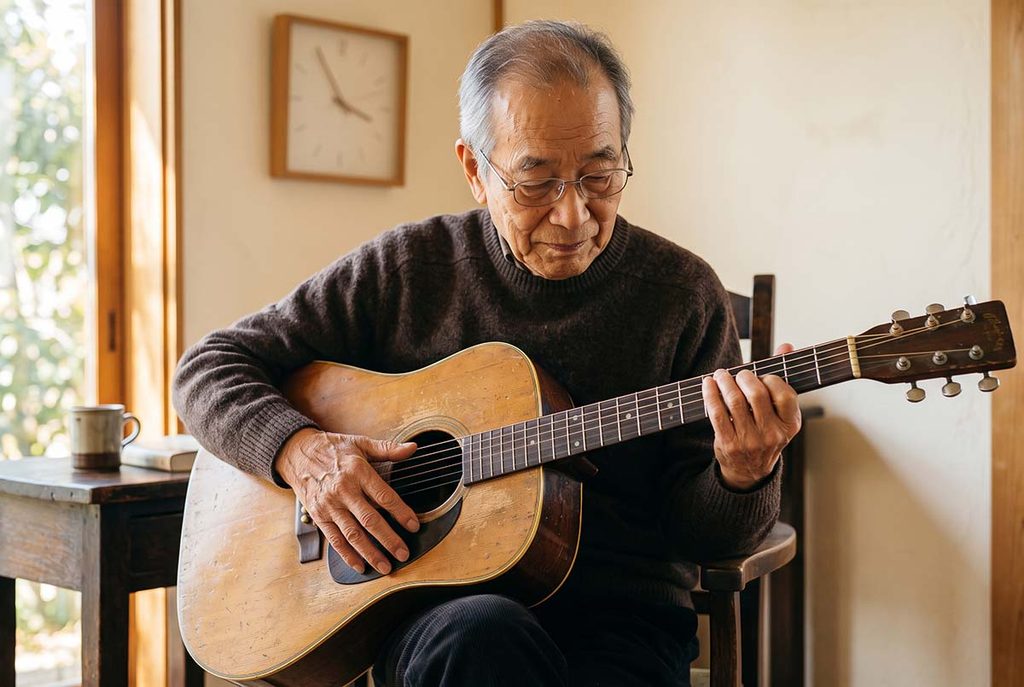
Resist the urge to test your old peak abilities right away. Listening to old records helps revive your auditory imagination, while learned movements need hands-on repetition. A short, focused session gives you a practical place to begin.
Ten to fifteen minutes is the suggested starting point here, although no study establishes that specific duration. Treat it as a practical suggestion you can work from. Trying to make up for lost time through hours of practice can bring considerable fatigue and strain. Speed and fluid transitions may need more time than the urge to test them allows.
Your initial focus belongs on rhythmic steadiness and relaxed hands. Rebuilding comfort takes patient, gentle repetition. Early on, steadiness gives you a more useful measure of progress than speed.
What Years of Listening Gave You
Decades of listening and life experience may give you a deeper understanding of harmony, emotional phrasing, and song structure than you had when you first learned. You may now understand things about music that you couldn’t recognize in your youth. That possibility is an interpretation rather than a measured comparison with younger beginners, and it assumes that your listening has developed your understanding. It also helps explain why you can hear what you want to play more clearly than your hands can currently produce it.
What Stayed and What Needs Time
Conscious recall of facts can become harder without use, while procedural memory may remain more stable. Calluses, stamina, and coordination often decline during time away. Your remembered playing can therefore set expectations that your current hands struggle to meet.
The warmup decrement and memory savings offer context for understanding a difficult first attempt, with limits on how directly that research applies to years away from guitar. Begin with a short, focused session, using ten to fifteen minutes as a practical suggestion. Work on steadiness and relaxed hands, and give speed and fluid changes time. Your brain kept what you learned. Your body is what needs time to catch up.
Rebuilding Access to What You Kept
Returning to guitar involves rebuilding access to previous learning. That means reestablishing physical comfort with your hands and finding your way back to music you once played. The guitar that has sat in the corner can become part of that work again.
The learning stayed. What faded was your hands’ conditioning. The frustration you feel is the gap between an ear that came back first and hands that are still catching up. The distinction between procedural and declarative memory is well documented, as is the decline of conditioning during long breaks. The memory-savings finding discussed here comes from verbal research and is applied to guitar by inference, while the warmup decrement has been studied mostly after shorter rests. These explanations offer useful ways to understand your return, but they don’t guarantee a timeline or a former level of playing.
Frequently Asked Questions
Why do my hands feel clumsy when I start guitar again after years away?
Years away can reduce fingertip calluses, forearm stamina, and fine coordination. Those changes affect what your hands can produce, even when previous learning remains. Your ear may still remember your old playing clearly, making today’s hesitant notes feel especially discouraging. That first attempt doesn’t establish how much learning you’ve retained.
What is declarative memory, and why have I forgotten guitar note names?
Declarative memory is the memory you use to consciously recall facts, including note names, scale patterns, and music theory. Without reinforcement, that information can become harder to recall. A fretboard that feels unfamiliar therefore doesn’t establish that every part of your guitar learning has disappeared, because learned movements involve procedural memory.
What is procedural memory? Is it the same as muscle memory?
Procedural memory is memory for learned movements. Those movements depend on brain networks, including the cerebellum and basal ganglia. “Muscle memory” is a familiar name for this learning. Retained movement memory can hold up better than conscious recall of facts, although it doesn’t mean your hands have kept their conditioning.
What does warmup decrement mean when returning to guitar?
Warmup decrement is a dip in performance when resuming a practiced activity after rest. Your first attempts may feel sluggish or uneven before performance improves. The research discussed concerns shorter breaks, so extending it to years away is an inference. It doesn’t establish that every returning player’s clumsiness has the same cause.
What is memory savings, and does it mean guitar will come back faster?
Memory savings describes the time and effort saved when relearning something previously learned, even when immediate recall is poor. Hermann Ebbinghaus demonstrated this with verbal material. Applying that finding to guitar is an inference in this article. It supports considering what relearning may reveal, but it doesn’t predict your recovery speed.
What is the expectation gap when I return to guitar?
The expectation gap is the difference between the music you remember being able to play and what your hands can currently produce. Your ear expects fluid playing, while your fingers deliver hesitant or buzzing notes. The article uses this as an interpretation of a common experience, with no measured pattern established for everyone.
Am I starting from zero, and is the explanation fully established?
Clumsy first minutes don’t establish that you’re starting from zero. The distinction between declarative and procedural memory, and declining conditioning during long breaks, supports separating retained learning from current performance. However, the article’s guitar-specific recovery pattern involves inference. Your former skill level and the time needed to rebuild access aren’t guaranteed.
How should an adult returning to guitar judge early progress?
Early progress is better judged through rhythmic steadiness and relaxed hands than by immediately testing old peak speed. The article suggests ten to fifteen minutes of focused physical practice as a practical starting point. This approach separates current conditioning from retained learning and gives the hands time to adapt.